IndieDesk – Why I Built It
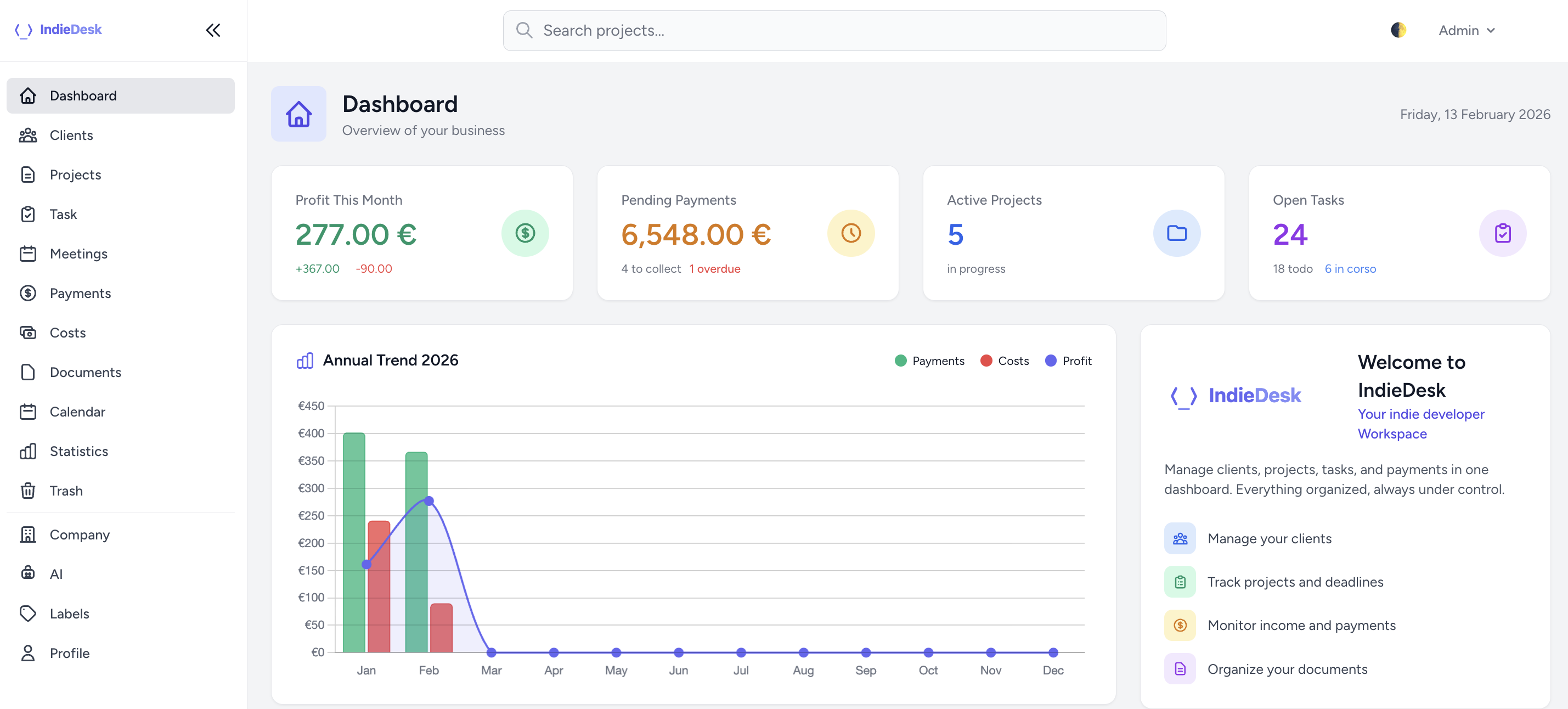
After years of building software for other people, managing client projects, handling invoices, tracking payments and juggling multiple tools, I realized something simple:
I did not have a workspace that truly fit the way I work.
There Was Always Something Missing
I tried using different tools. Task managers. Note apps. Billing platforms. Spreadsheets.
But everything was fragmented. Tasks in one place. Costs in another. Payments somewhere else. Invoice drafts disconnected from actual project data.
As a developer, that friction adds up. Context switching kills clarity.
So I Built What I Needed
Instead of adapting my workflow to a SaaS product, I decided to build a workspace around the way I actually operate.
That’s how IndieDesk started.
A clean, focused Laravel application where:
- Each project is a central container.
- Tasks live inside the project.
- Costs are tied directly to that project.
- Payments are tracked against real work.
- Invoice drafts are generated from actual project data.
Why Self-Hosted?
I didn’t want another subscription. I didn’t want vendor lock-in.
IndieDesk is self-hosted by design.
- You deploy it on your own server.
- You own the code.
- You can modify everything.
- You are not forced into predefined billing systems.
It’s a foundation, not a cage.
Built With Real-World Usage in Mind
IndieDesk is not a theoretical side project. It was shaped by actual freelance work.
When you manage multiple clients, you need visibility.
How much has been paid? What’s still outstanding? Which project is consuming more time? Are costs eating into margins?
IndieDesk gives that operational clarity.
The Technical Foundation
The application is built with Laravel 12, using Blade components and a clean relational structure.
The architecture is intentionally simple:
- Clients
- Projects
- Tasks
- Costs
- Payments
- Invoice Drafts
No over-engineering. Just structured entities that reflect real work.
From Personal Tool to Public Template
At some point, I realized this wasn’t just useful for me.
Many developers face the same operational chaos. Especially indie hackers and freelancers who want control without complexity.
So I decided to release IndieDesk as a template.
Not as a bloated SaaS. Not as a locked ecosystem. But as a starting point anyone can modify and extend.
Who It’s For
- Developers managing client projects.
- Freelancers who want cost and payment clarity.
- Indie hackers building their own internal tools.
- Anyone who prefers owning their stack.
Final Thought
IndieDesk is not about hype. It’s about control.
It’s about building your own operational backbone instead of renting one.
I built it because I needed it. I released it because others might need it too.